
The Family Office as Africa’s Next Capital Engine
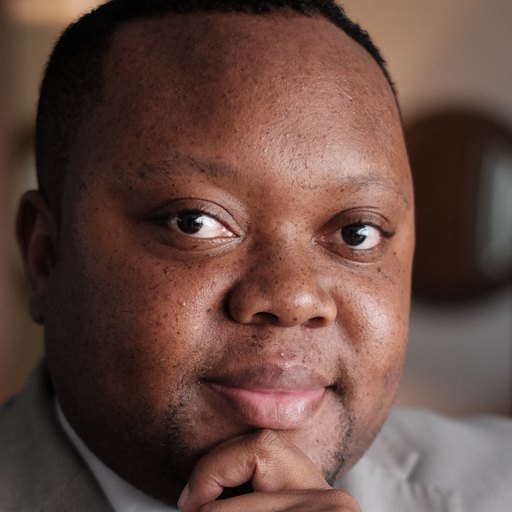
When I took the helm of HoneyBadger Family Office in early 2026, I did so with a conviction that has hardened through every year of my career: the most effective capital on the African continent is no longer sitting in a fund. It is sitting in a family office. Not because family offices are larger - they are not - but because they are structurally free in the precise ways that funds are structurally bound.
A fund is a creature of its mandate: a defined vintage, a defined life, a defined return hurdle, and an investment committee that must justify every decision against a clock that is always ticking down. A family office has permanent capital. It has no redemption window, no fund-life expiry, no need to return capital by year ten. That single structural difference changes everything about how - and where - capital can be deployed.
The fund asks: will this return capital inside my window? The family office asks: is this the right thing to own for the next decade? Those are different questions, and they produce different portfolios. - Richard Ngwenya
Why fintech is the entry point
Africa’s financial infrastructure is being rebuilt in real time. Payments, credit, insurance, capital-markets plumbing - the entire stack is being re-architected by a generation of founders who are not iterating on legacy rails but replacing them. The businesses building that infrastructure need a kind of capital that traditional venture and private equity struggle to provide: capital that can hold a position through the long, unglamorous middle years between product-market fit and scaled profitability, without marking to a quarterly redemption schedule.
That is precisely what a family office can do. It can take a multi-year, conviction-led position in a payments platform or a lending infrastructure business, fund the bridge between Series A and profitability, and stay invested through the compounding years that funds are structurally pressured to exit. The decisiveness matters as much as the patience: there is no investment-committee theatre, no LP newsletter to manage, no need to stage capital to fit a deployment schedule. A founder deals with the person who actually writes the cheque.
The discipline institutions have, that family offices must borrow
But I want to be careful not to romanticise this. The freedom of a family office is also its risk. Without the institutional pressure of a fund, it is easy to drift - to back founders on charisma, to hold losers too long, to confuse patience with inertia. The family offices that will succeed as Africa’s capital engine are the ones that borrow the discipline of institutional capital while keeping its freedom: rigorous diligence, clear theses, defined loss tolerance, and the willingness to act on conviction where a fund committee would convene a meeting.
The opportunity: Africa’s financial-services stack is being rebuilt once. The capital that backs the winners of that rebuild will not be the capital with the biggest chequebook - it will be the capital that can hold the position longest. That is the family office’s structural edge.
Beyond fintech: the AI layer
The same logic extends to the layer above financial services: applied artificial intelligence. The businesses building the intelligence layer that will underwrite, distribute and operate African financial services over the next decade need exactly the kind of patient, conviction-led, infrastructure-tolerant capital that family offices are built to hold. These are not quick-flip positions. They are multi-year, platform-building bets - and the family office, with its permanent capital and its absence of a fund clock, is structurally the most capable backer of them.
The shift underway
We are watching a quiet reallocation of African growth capital. The headlines still belong to mega-rounds and mega-funds, but the capital that actually compounds - that backs the platforms through the long middle, that founders call when the institutional market hesitates - is increasingly family-office capital. In my own portfolio, across Nisela and now HoneyBadger, the throughline is the same: the structuring is the value, and the patience is the edge.
The family office is not the future of African capital because it is fashionable. It is the future because, structurally, it is the form of capital best matched to the long arc of building African financial infrastructure. The funds will still play their role. But the capital that compounds - that is the family office’s to win.